Ask a Chinese winemaker which red grape best represents the country and there is a good chance the answer is Marselan. It is not native to China and it is not especially famous in France, yet this dark-skinned crossing has found a second home on Chinese vineyards, and in Singapore you can now try it by the glass or bottle at Vinflow Wine Bar & Bistro.

What is Marselan?
Marselan is a red wine grape created in 1961 by crossing Cabernet Sauvignon with Grenache. The crossing was made near Marseillan in southern France, and the grape takes its name from that town. The aim was a vine that combined Cabernet's structure and dark fruit with Grenache's generosity and ripeness, while giving reliable yields in warm conditions.
For decades it remained a relatively minor variety. It has since been planted in several countries, but it is in China that Marselan has become widely planted and celebrated. Many producers now treat it as a calling card, which is why you will often see it described as China's signature grape.
What does Marselan taste like?
Marselan sits between its two parents. From Cabernet Sauvignon it tends to inherit dark fruit, colour and some firmness; from Grenache, a softer, rounder feel and a perfumed side. Typical descriptors include blackberry, black cherry, plum, violet and other floral notes, with gentle spice and sometimes a chocolatey or herbal edge as the wine matures or sees oak.
Compared with Cabernet Sauvignon, Marselan is usually more approachable when young: the tannins can feel plusher and the aromas more openly floral. Compared with Grenache, it generally has deeper colour and more grip. That combination is what makes it an easy bridge for drinkers who like Merlot or Shiraz but want something with a little more aromatic lift.
Style will always vary with the producer, the vintage and the oak. The tasting cues below are the published or typical profiles for each wine, not our own tasting assessments.
Why does Marselan suit China's wine regions?
Marselan is generally considered well suited to sunny, dry growing conditions, and many of China's wine regions offer exactly that. Our guide to Chinese wine regions covers the map in more detail, but a few of the places behind the bottles we list show the pattern:
- Ningxia, in the eastern foothills of the Helan Mountains, is China's best-known fine-wine region. Silver Heights describes abundant sunshine and stony soils at roughly 1,200 metres, while Huwei grows Marselan alongside Pinot Noir, Cabernet Sauvignon, Merlot and Chardonnay. Our Ningxia wine guide goes deeper.
- Xinjiang's Yanqi Basin, where Tiansai was established in 2010, sits at the foot of the Tianshan mountains with ample sunshine and snow-melt water.
- Shanxi's Taigu, home to Grace Vineyard, has a dry continental climate, sandy loam soils and wide day-night temperature swings.
Dry, sunny days help the grapes ripen, while cool nights can preserve freshness. Winters in several of these regions are cold enough that vines are traditionally buried for protection, a detail that makes every harvest a little more of an achievement.
What food pairs well with Marselan?
Marselan's dark fruit and soft tannins make it flexible at the table. These are suggestions, not rules:
- Roasted and grilled meats such as duck, lamb or beef, where the wine's fruit can stand up to caramelised edges.
- Soy-braised and slow-cooked dishes, whose savoury depth suits a red with spice and plum notes.
- Mushrooms and earthy vegetables, which echo the wine's more savoury side.
- Charcuterie and aged cheese, particularly with the lighter, more floral examples.
Our Chinese wine food pairing guide has more ideas, and the team can suggest shareable plates to go with whichever bottle or pour you choose.
Where to try Marselan in Singapore
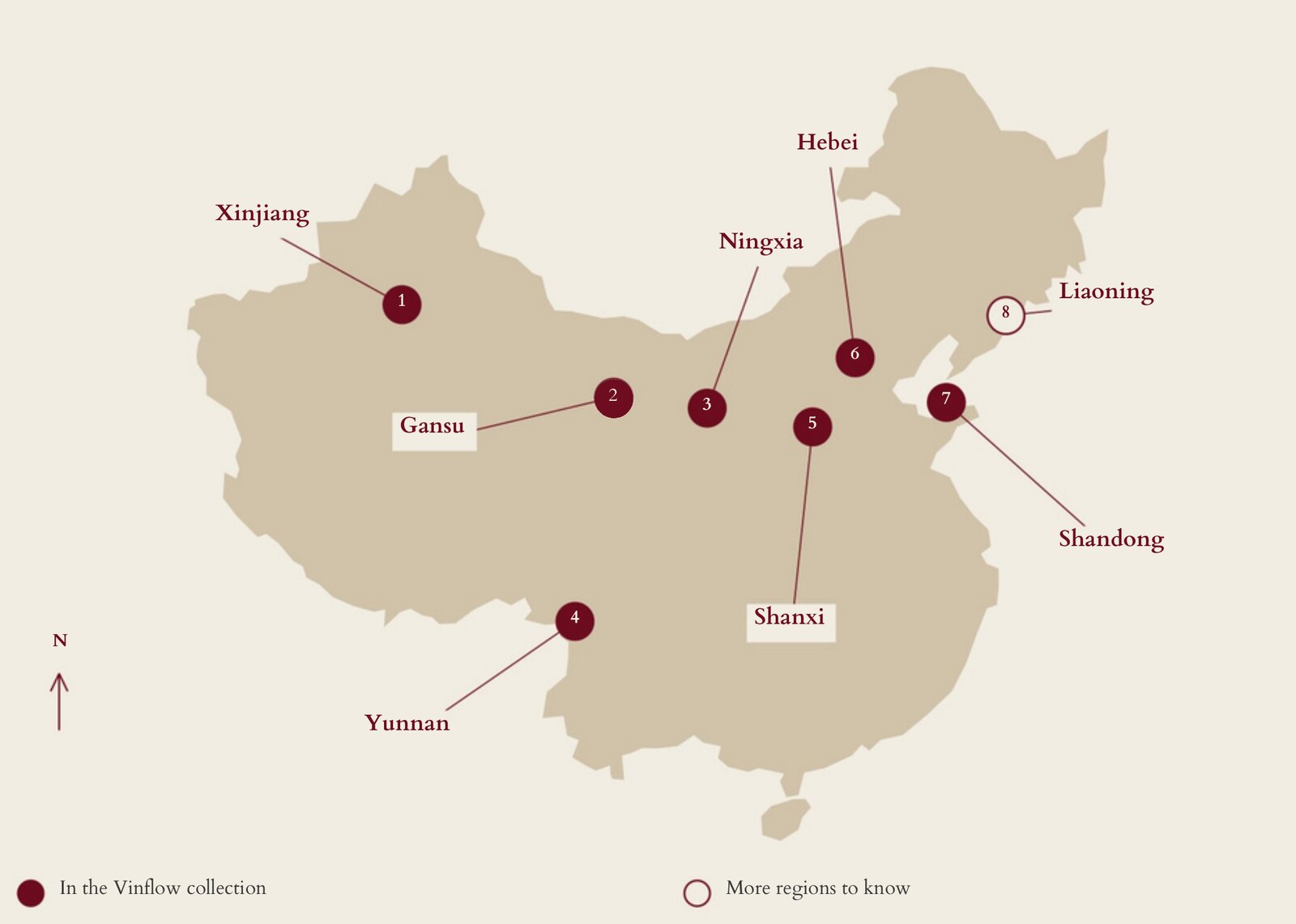
Vinflow Wine Bar & Bistro carries 32 Chinese wines from 15 wineries across seven Chinese regions, and Marselan appears in several forms. Here are the Marselans from our wine collection, with published tasting cues:
On tap now
HUWEI “Zhuan” Marselan 2021 (Ningxia) is currently on our self-pour wall, with tasting cues of black fruit, chocolate and spice. Huwei's vineyard was established in 2014 in the eastern foothills of the Helan Mountains, with hand harvesting, gravity-fed fermentation and French oak ageing. As with all taps, the selection is subject to change and availability, so ask the team what is pouring on the day.
Single-varietal Marselan by the bottle
- Silver Heights Jiayuan Marselan 2023 (Ningxia): dark berries and floral notes. Silver Heights was founded in 2007 and Jancis Robinson has described it as a rising star of Chinese wine.
- Fei Tswei Reserve Marselan 2020 (Ningxia): dark berries and floral notes, from a winery established in 2013 that works with estate-grown, hand-harvested grapes.
- Tiansai Skyline of Gobi Grand Reserve Marselan 2019 (Xinjiang): mulberry, black cherry and spice, from the Yanqi Basin.
Blends that include Marselan
- Grace Vineyard Recalling The Year 2025 (Shanxi): a blend of Cabernet Sauvignon, Merlot, Syrah and Marselan with fresh fruit and a supple texture. It is one of the four wines in our Premium Chinese Wine Flight.
- Grace Vineyard Deep Blue 2021 (Shanxi): Merlot, Cabernet Sauvignon, Cabernet Franc and Marselan, with plum and dark berry notes.
The Marselan specialists and what else to know
Domaine Pushang, a boutique family estate in Ningxia established in 2009, is known in China as a “Marselan expert”, and the winery reports Gold Medals at the Decanter World Wine Awards. Vinflow currently lists its Chun Hua Cabernet Sauvignon 2019 rather than a Marselan, but it is a useful name to know if you are following the grape. Likewise, Longting, a boutique winery on Shandong's Penglai coast committed to natural and biodynamic farming, is exploring French varieties including Marselan; we do not currently list a Longting Marselan.
The Premium Chinese Wine Flight is a simple way to get a broader view. For a $20++ top-up to regular-priced free-flow ordered between 5 and 8 pm, you receive four different Chinese wines, one glass each: Kanaan Riesling 2024, Tiansai Skyline of Gobi Chardonnay Muscat 2023, Grace Vineyard Recalling The Year 2025 and Fei Tswei Lava Cabernet Franc 2021. Refills are not included, promotional packages are excluded and the flight is subject to change. Details of our free-flow offers are on the promotions page.
A simple way to taste Marselan
If you are new to the grape, try two Marselans side by side, for example one from Ningxia and one from Xinjiang, and notice how floral, spicy or fruit-forward each feels. Then compare one with a Cabernet Sauvignon from our full wine list. Doing this across a table of shareable plates is a relaxed way to learn, and groups can talk to us about private events built around a tasting.
Wine selection, vintages and availability are subject to change. Wine service is for guests of legal drinking age; please drink responsibly.
Frequently Asked Questions
Marselan questions, answered
What does Marselan taste like?
Marselan typically shows dark berries, plum and violet-like floral notes, with a touch of spice and generally supple tannins. Published tasting cues for the Marselans we list include dark berries, floral notes, black fruit, chocolate, mulberry, black cherry and spice.
Is Marselan a Chinese grape?
No. Marselan is a French crossing of Cabernet Sauvignon and Grenache, created in 1961 near Marseillan in southern France. It has become widely planted and celebrated in China, especially in Ningxia, which is why many people think of it as China's signature grape.
Where can I try Marselan in Singapore?
Vinflow Wine Bar & Bistro at 55 Keong Saik Road lists Marselan from Silver Heights, Huwei, Fei Tswei and Tiansai, plus Grace Vineyard blends that include it. Wine selection, vintages and availability are subject to change, so check the current list or message us on WhatsApp.
What food goes with Marselan?
Marselan suits roasted and grilled meats, soy-braised dishes, mushrooms and richer shareable plates. Pairings are suggestions rather than rules; lighter, more floral bottles also work with poultry and charcuterie.