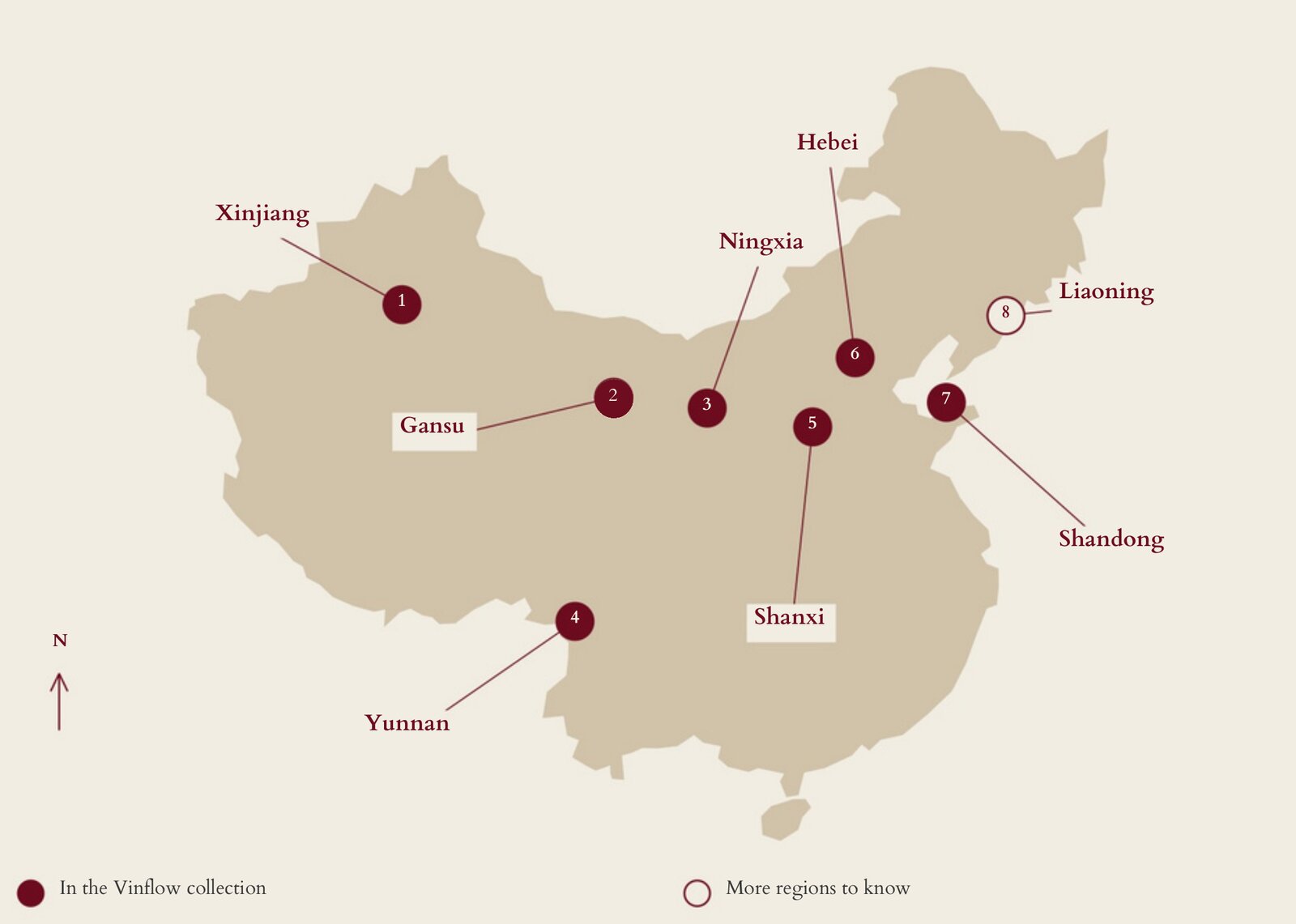
If one grape explains Chinese red wine, it is Cabernet Sauvignon. It is among the most widely planted wine grapes in China, and it is the grape behind many of the country’s most serious reds. This guide covers why it took hold, how Chinese Cabernet Sauvignon tends to taste, how regions differ, and which Cabernet wines you can try at Vinflow Wine Bar & Bistro in Singapore.
Why is Cabernet Sauvignon so widely planted in China?
Cabernet Sauvignon has been part of China’s modern wine story from early on. Several things explain its popularity. It is a thick-skinned, late-ripening red grape that likes plenty of sunshine, and many Chinese regions deliver dry, sunny summers. It also carries the deep colour and firm structure that Chinese drinkers and producers have long associated with red wine, and it is an international benchmark that winemakers know how to handle.
You will often meet it as part of a blend rather than alone. Bordeaux-style combinations of Cabernet Sauvignon with Merlot and Cabernet Franc are common in China, particularly in Ningxia. Several wines below are exactly that. If you are new to the category, our guide Is Chinese wine good? is a friendly place to start.
What does Chinese Cabernet Sauvignon taste like?
There is no single answer, because producer, vintage and region all shape the wine. Still, the published profiles for the Chinese Cabernets on our list share a family resemblance: blackcurrant, cassis and plum, with dark fruit at the centre. Some add savoury or aromatic touches such as mint, coffee, dried herbs or oak spice. Warm, sunny growing seasons tend to give ripe fruit, while cool nights help keep freshness.
Treat these as typical cues rather than our own tasting notes. The best way to understand them is to pour two or three side by side, which is easy to do with a few glasses and a few shareable plates.
Ningxia Cabernet Sauvignon: the Helan Mountain benchmark
Ningxia is the region most often linked with fine Cabernet Sauvignon in China. Its vineyards lie on the eastern foothills of the Helan Mountains, in a dry continental climate with plenty of sunshine. Winters are so cold that growers bury their vines under soil each autumn to protect them, then uncover them in spring. For more on the region, see our Ningxia wine guide.
At Vinflow, the Ningxia Cabernet Sauvignon wines come from four producers:
- Silver Heights The Summit 2022 (Cabernet Sauvignon) — blackcurrant and dark fruit. The winery was founded in 2007, with vineyards at around 1,200 metres, and Jancis Robinson has described it as a rising star of Chinese wine.
- Silver Heights Emma’s Reserve 2021 (Cabernet Sauvignon, Merlot) — dark fruit, freshness and oak.
- Domaine Pushang Chun Hua Cabernet Sauvignon 2019 — black fruit, mint and coffee. A boutique family estate established in 2009; the winery reports Gold Medals at the Decanter World Wine Awards.
- Fei Tswei Lava Cabernet Sauvignon 2022 — blackcurrant and dark fruit. Fei Tswei works with estate-grown, hand-harvested grapes.
- Kanaan Black Beauty 2018 (Cabernet Sauvignon, Merlot) — dark berries and plum. Kanaan’s wines have been recommended by Jancis Robinson, Bernard Burtschy and Ian D’Agata.
Looking for a different Cabernet angle? Fei Tswei’s Lava Cabernet Franc 2021 (mint, plum and raspberry) sits in our Premium Chinese Wine Flight and makes a neat comparison with the Cabernet Sauvignon. Cabernet Gernischt, which you may see on Chinese lists, is a different grape from Cabernet Sauvignon; DNA analysis has shown it to be Carménère.
Gansu: Cabernet from the Hexi Valley
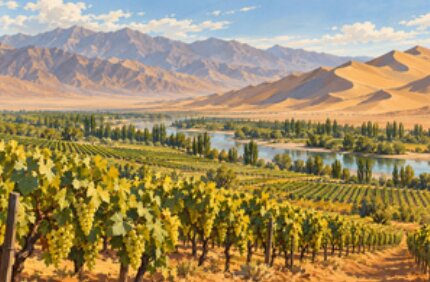
Gansu’s Hexi Valley is a long, narrow strip of oasis farmland in north-west China, running between deserts and mountains. Ease Estate is in Minqin, Wuwei, beside the Hongya Mountain Reservoir where the Tengger and Badain Jaran deserts meet. We list its Being Real Classico Reserva Cabernet Sauvignon 2021, with black cherry, black plum, butter and vanilla. The estate launched its Being Real range in 2017.
Xinjiang and the Tianshan mountains
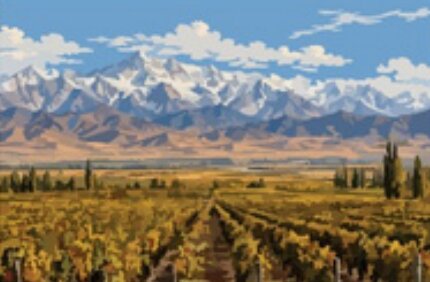
Xinjiang in China’s far west is a very large region with sunny, dry conditions and snow-melt from the Tianshan mountains. Petit Mont, a winery with vineyards in several regions including Yili in Xinjiang, is represented by its Tianshan Mountain Cuvée Prestige Cabernet Sauvignon 2021, with cassis, plum and oak spice.
Yunnan: high-altitude Cabernet

Yunnan’s wine country lies in the Himalayan highlands in China’s south-west, where vineyards are planted at high altitude on steep slopes. It is a very different landscape from Ningxia’s dry foothills. Two producers on our list work here:
- Petit Mont Baima Snow Mountain Yanjing 2022 (Cabernet Sauvignon, Merlot) — blackcurrant and plum. The vineyards are near Baima Snow Mountain.
- Bauzuan Célèbre Red 2018 (Cabernet Sauvignon) — blackcurrant and dark fruit. Bauzuan’s terraced vineyards sit at more than 2,200 metres.
- Bauzuan ALLOFME Rosé 2023 (Cabernet Sauvignon) — red berries and citrus. A reminder that Cabernet Sauvignon also appears in rosé.
Shanxi: Cabernet in Bordeaux-style blends
Grace Vineyard in Taigu, Shanxi, sits on the loess plateau, where a dry continental climate, sandy loam and wide day-night temperature swings suit quality wine. Its wines have been praised by Jancis Robinson, James Halliday, Wine Spectator and Decanter. Three of its reds are Cabernet-based blends:
- Recalling The Year 2025 (Cabernet Sauvignon, Merlot, Syrah, Marselan) — fresh fruit and a supple texture. It is in the Premium Chinese Wine Flight.
- Deep Blue 2021 (Merlot, Cabernet Sauvignon, Cabernet Franc, Marselan) — plum and dark berries.
- Chairman’s Reserve 2018 (Cabernet Sauvignon, Merlot, Cabernet Franc) — cherry, cassis and dried herbs.
Blends like these are a good bridge for anyone who enjoys Bordeaux or Napa. For the grape that often appears alongside Cabernet in China, read our Marselan guide.
How to taste Chinese Cabernet Sauvignon at Vinflow
Vinflow carries Cabernet Sauvignon and Cabernet-based wines from Ningxia, Gansu, Xinjiang, Yunnan and Shanxi. Wine selection, vintages and availability are subject to change, so please check the full wine list or ask the team. A few ways to approach it:
- Compare regions. Try a Ningxia Cabernet next to the Yunnan Célèbre Red, to taste desert-foothill sunshine against mountain altitude.
- Compare blends. Put Silver Heights Emma’s Reserve beside Grace Vineyard Chairman’s Reserve to see how Cabernet-Merlot blends differ between provinces.
- Start with the flight. The Premium Chinese Wine Flight is a +$20++ top-up to regular-priced free-flow ordered 5–8 pm: four different Chinese wines, one glass each (Kanaan Riesling 2024, Tiansai Skyline of Gobi Chardonnay Muscat 2023, Grace Vineyard Recalling The Year 2025 and Fei Tswei Lava Cabernet Franc 2021). Refills are not included, promotional packages are excluded, and the line-up is subject to change. See our promotions page.
- Add food. Firm, dark-fruited reds usually suit richer, savoury shareable plates. Pairings are only suggestions; see Chinese wine and food pairing for ideas.
Thinking of Chinese wine as a gift? Our Chinese wine gift guide may help. For a group evening, see private events, and for the wider geography, Chinese wine regions.
Plan your visit
Vinflow is at 55 Keong Saik Road, #01-01, Singapore 089158, open daily from 3 pm. Reservations are handled through OpenTable, and you can also message us on WhatsApp. Wine service is for guests of legal drinking age; please drink responsibly.
Frequently Asked Questions
Chinese Cabernet Sauvignon
Is Cabernet Sauvignon grown in China?
Yes. Cabernet Sauvignon is one of the most widely planted wine grapes in China and has been part of the country’s modern wine industry since its early years. It is grown across many regions, including Ningxia, Gansu, Xinjiang and Yunnan.
What does Chinese Cabernet Sauvignon taste like?
Published profiles for the Chinese Cabernets we list point to blackcurrant, cassis, plum and dark fruit, sometimes with mint, coffee, dried herbs or oak spice. Style varies by region, producer and vintage, so these are typical cues rather than guarantees.
Which Chinese region is best known for Cabernet Sauvignon?
Ningxia, on the eastern foothills of the Helan Mountains, is the region most often associated with fine Cabernet Sauvignon and Bordeaux-style blends. Gansu, Xinjiang and Yunnan also produce Cabernet Sauvignon, each with its own landscape and climate.
Where can I try Chinese Cabernet Sauvignon in Singapore?
Vinflow Wine Bar & Bistro at 55 Keong Saik Road, #01-01 lists Cabernet Sauvignon wines and Cabernet-based blends from Ningxia, Gansu, Xinjiang, Yunnan and Shanxi. Selection, vintages and availability are subject to change, so check the wine list or ask the team.
Is Cabernet Gernischt the same as Cabernet Sauvignon?
No. Cabernet Gernischt is a different red grape long associated with China; DNA analysis has shown it to be the same grape as Carménère. It is not a Cabernet Sauvignon clone, despite the name.