Xinjiang wine sits at the far end of the Chinese wine map: north-west China, deserts and snow-capped mountains, and vines that have to be tucked under soil for winter. This guide explains the geography, the main grapes and what to expect in the glass, then shows which Xinjiang wines you can try at Vinflow Wine Bar & Bistro on Keong Saik Road.
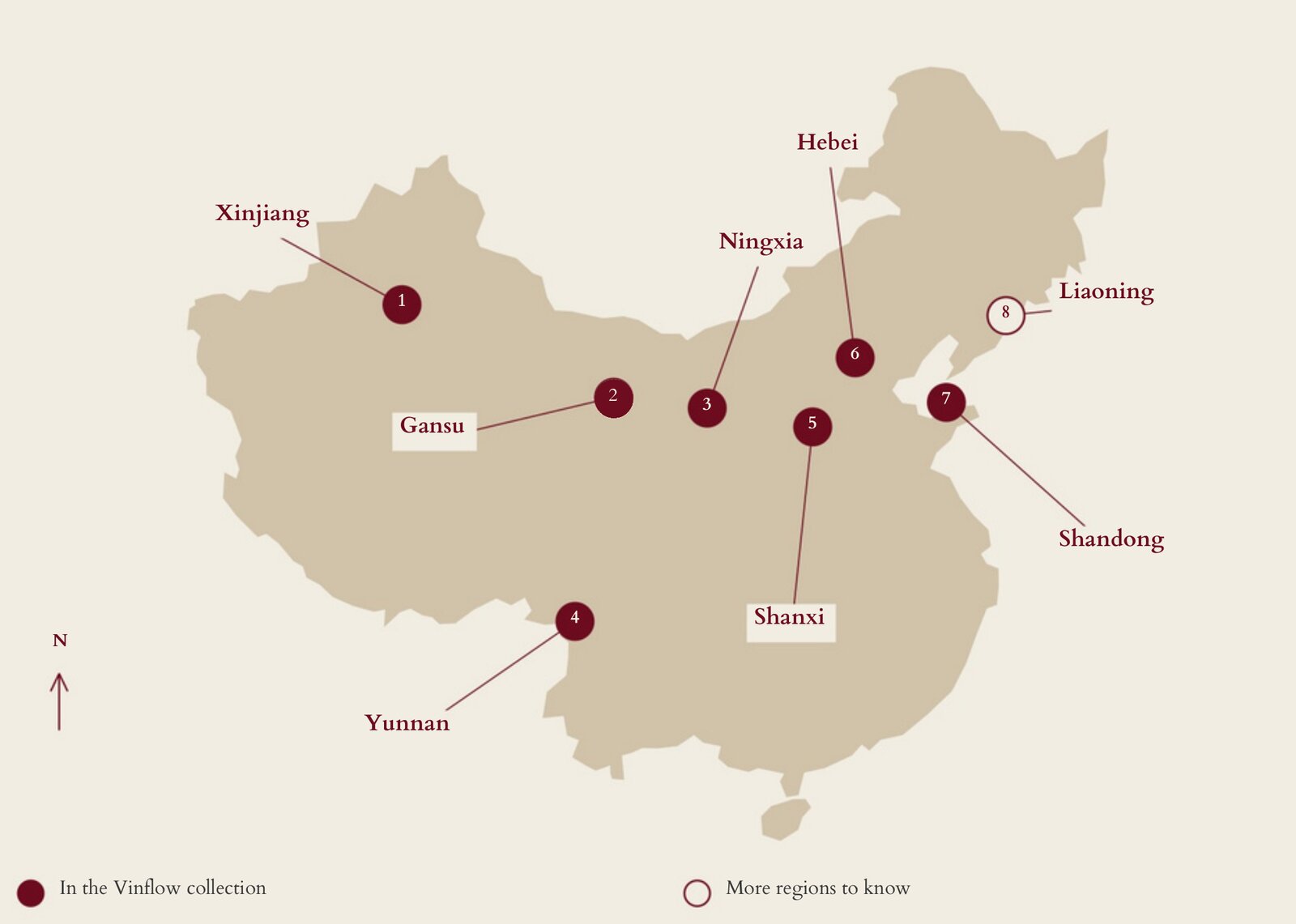
Xinjiang is one of seven Chinese regions in our collection, which also covers Ningxia, Gansu, Yunnan, Shanxi, Hebei and Shandong. If you are new to the category, our Chinese wine collection in Singapore is a good place to start. Here we zoom in on one region.
Where is Xinjiang wine made?
Xinjiang is a very large region in north-west China, with mountains, basins and desert fringes. Wine grapes are grown mainly in four areas, according to Decanter China’s regional reporting: the northern foothills of the Tianshan mountains, the Yanqi Basin, the Turpan Basin and the Ili (Yili) Valley.
- Tianshan northern foothills. The area on the northern side of the Tianshan range, where larger producers have traditionally been prominent. Wines named for the Tianshan, such as Petit Mont’s below, point to this mountain range.
- Yanqi Basin. A basin in the south of the region, at the foot of the Tianshan. Wine writers describe it as a harsher version of Ningxia, and it is where Tiansai Vineyard is based.
- Turpan Basin. A very hot, very dry basin with extremely low rainfall.
- Ili (Yili) Valley. The wettest of the four, receiving noticeably more rain than the rest of the region.
Xinjiang has a long history of grape growing, though most of Xinjiang’s vineyards have historically been about volume, with a smaller group of boutique producers focused on fine wine.
What is the climate like for Xinjiang vines?
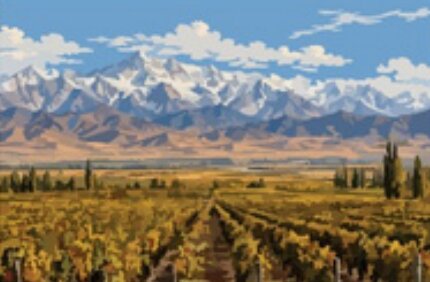
The headline features are sunshine, dryness and extremes:
- Lots of sun and big day-night swings. Plenty of sunshine and a wide gap between daytime and night-time temperatures help grapes build sugar and keep some freshness.
- Very little rain. Most of the region is even drier than Ningxia, so vineyards rely on irrigation; drip irrigation is widely used. The dry air also means fewer vine diseases, although occasional wet summers can bring mildew.
- Stony ground. Wine experts describe the plains as alluvial, with coarse, gravelly Gobi-desert soils.
- Cold winters. Across most Chinese wine regions in the continental north, including Xinjiang, vines need to be buried under soil each winter to survive the cold, then uncovered in spring. It is hard work and part of why growing here is demanding.
- Hot summers, short season. Sugar ripeness comes easily, but achieving full flavour ripeness in a short growing season can be a challenge.
For a comparison with Ningxia’s milder-by-comparison foothills, see our Ningxia wine guide, or our overview of Chinese wine regions.
Which grapes are grown in Xinjiang?
As in much of China, French varieties dominate, especially Cabernet Sauvignon, alongside Merlot, Marselan and Chardonnay. Marselan, a crossing of Cabernet Sauvignon and Grenache created in France, is widely regarded as a signature grape for China; we explain why in our guide to the Marselan grape. Aromatic whites such as Riesling are also grown, and Muscat features in some blends.
In general, producers across these dry, sunny regions often make fuller-bodied, richly fruited reds, though styles vary by estate, vintage and winemaker. Cabernet fans may enjoy our look at Chinese Cabernet Sauvignon.
Tiansai Vineyard and Skyline of Gobi: the Yanqi Basin estate
Tiansai Vineyard was established in 2010 in the Yanqi Basin at the foot of the Tianshan mountains. The estate describes its setting as enclosed by mountains on three sides and a lake on the fourth, with ample sunshine and snow-melt water. Skyline of Gobi is the name on the labels of the Tiansai wines on our list.
Two Skyline of Gobi wines are on Vinflow’s list, and one of them is in our Premium Chinese Wine Flight, which makes Tiansai a convenient way to taste the Yanqi Basin.
Where to try Xinjiang wine in Singapore
Vinflow carries 32 Chinese wines from 15 wineries across seven Chinese regions. These are the Xinjiang-linked wines on our list. Tasting cues are published profiles, not our own tasting assessments, and wine selection, vintages and availability are subject to change. See the full wine list or ask the team on the day.
Tiansai Skyline of Gobi Chardonnay Muscat 2023
A white blend of Chardonnay and Muscat from the Yanqi Basin, with a published profile of floral, fresh and gently fruity. It is one of the four wines in the Premium Chinese Wine Flight.
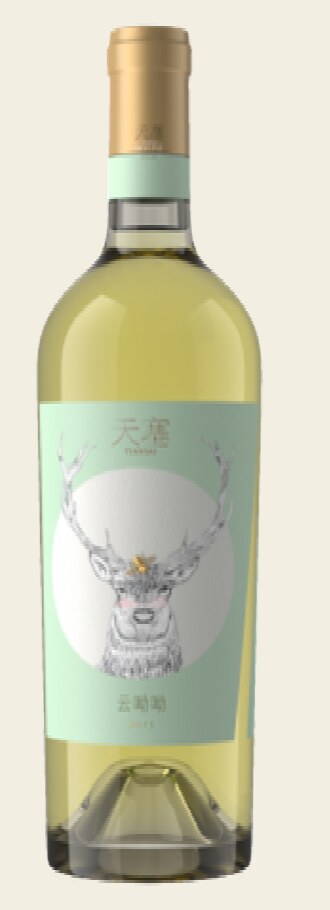
Bottle image for reference.
Tiansai Skyline of Gobi Grand Reserve Marselan 2019
A red Marselan with a published profile of mulberry, black cherry and spice. If you enjoyed the Ningxia Marselan on our tap wall, this is a good way to see how the same grape behaves further west.
Petit Mont Tianshan Mountain Cuvée Prestige Cabernet Sauvignon 2021
Petit Mont is a Chinese winery with vineyards in several regions, including Yunnan, Ningxia’s Helan Mountain East and Yili in Xinjiang. Its Tianshan Mountain Cuvée Prestige Cabernet Sauvignon carries a published profile of cassis, plum and oak spice.
The Skyline of Gobi Chardonnay Muscat is the only one of the three in the Premium Chinese Wine Flight. At the moment our Chinese wines on the 32-tap wine wall are from Ningxia and Hebei, so the Xinjiang wines are not on tap; the tap selection changes, so ask on the day.
The Premium Chinese Wine Flight
The flight is a +$20++ top-up to regular-priced free-flow ordered between 5 and 8 pm. It includes four different Chinese wines, one glass of each:
- Kanaan Riesling 2024 (Ningxia)
- Tiansai Skyline of Gobi Chardonnay Muscat 2023 (Xinjiang)
- Grace Vineyard Recalling The Year 2025 (Shanxi)
- Fei Tswei Lava Cabernet Franc 2021 (Ningxia)
Refills are not included, promotional packages are excluded, and the flight is subject to change. See our promotions page for free-flow details.
How to taste Xinjiang wine: a simple plan
- Start with the flight. Taste the Tiansai Chardonnay Muscat beside the Kanaan Riesling to compare two aromatic Chinese whites from different regions.
- Compare Marselan. Taste the Skyline of Gobi Grand Reserve Marselan next to Ningxia’s HUWEI “Zhuan” Marselan if it is pouring on the tap wall.
- Try the Cabernet. Petit Mont’s Tianshan Cabernet Sauvignon is a useful marker for how Cabernet reads in this part of China.
- Share a few plates. Order shareable plates and treat the wines as part of dinner; pairings are suggestions only, and our guide to Chinese wine and food pairing has more ideas.
Still deciding whether Chinese wine is for you? Read is Chinese wine good? Planning a group evening? See our private events page.
Plan your visit
Vinflow is at 55 Keong Saik Road, #01-01, Singapore 089158, and open daily from 3 pm. Reservations are recommended through OpenTable, and you can also message us on WhatsApp. Ask the team which Xinjiang wines are available that day. Wine service is for guests of legal drinking age; please drink responsibly.
Frequently Asked Questions
Xinjiang wine in Singapore
Where is Xinjiang wine made?
Xinjiang is a large region in north-west China. Wine grapes are grown mainly in four areas: the northern foothills of the Tianshan mountains, the Yanqi Basin, the Turpan Basin and the Ili (Yili) Valley.
What grapes are used in Xinjiang wine?
French varieties dominate across China’s wine regions, especially Cabernet Sauvignon, with Merlot, Marselan and Chardonnay also common. Tiansai’s Skyline of Gobi range at Vinflow includes a Chardonnay Muscat and a Marselan.
Where can I try Xinjiang wine in Singapore?
Vinflow Wine Bar & Bistro at 55 Keong Saik Road lists Tiansai Vineyard’s Skyline of Gobi Chardonnay Muscat 2023, which is in the Premium Chinese Wine Flight, and its Grand Reserve Marselan 2019, plus Petit Mont’s Tianshan Mountain Cuvée Prestige Cabernet Sauvignon 2021. Selection, vintages and availability are subject to change.
What is the Premium Chinese Wine Flight?
It is a +$20++ top-up to regular-priced free-flow ordered between 5 and 8 pm: four different Chinese wines, one glass each, including Tiansai’s Skyline of Gobi Chardonnay Muscat 2023. Refills are not included, promotional packages are excluded, and the line-up is subject to change.